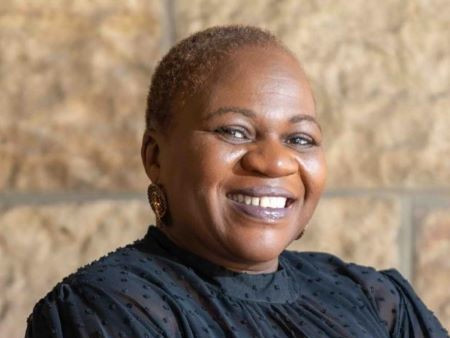
Vodacom Foundation executive head, Mashudu Ndou.
Pan African connectivity, digital and financial services giant Vodacom Group recently brought together the eight foundations under its brand into one, aptly titled the Vodacom Foundation.
It has also appointed a seven-member board to guide the shift towards scalable, digitally enabled programmes across connected health, connected education and digital skilling.
ESG Global sent Mashudu Ndou, executive head of the Foundation, three clever questions on environmental impact, the wisdom of experience and measurable, scalable social impact.
What does “measurable, scalable social impact” mean in layman’s terms?
Ensuring tracking and accountability is essential as we reach and strive to impact more people. This includes being able to track how the number of people our interventions are reaching and the timeframe in which this takes. For us to reach our ambition of positively impacting 50 million lives by 2030, we are ensuring that our tracking systems and frameworks are robust.
Where does climate or energy sit in the Foundation’s thinking, given that connectivity programmes depend on power in exactly the places that lack it?
While not a separate Foundation programme, management of environmental impact is woven into several of the existing education, health, inclusion and disaster-response portfolios as a cross-cutting climate-resilience and environmental-literacy theme. We intend, over time, to continue to drive integration and mature programmes.
Currently, Vodacom Foundation’s approach to environmental sustainability combines infrastructure, education and community resilience to create long-term social impact. Through initiatives such as the Green ECD programme in South Africa, centres are equipped with sustainable solutions including solar energy, water-security systems, food gardens, recycling facilities, and digital environmental learning resources.
Environmental awareness is further integrated into education programmes such as Faz Crescer in Mozambique, where learners are encouraged to develop responsible environmental practices and innovative solutions to sustainability challenges. In partnership with the Vodafone Foundation and UNHCR, the Instant Network Schools programme provides refugee and host-community schools with connectivity, digital learning tools, teacher training and solar-powered infrastructure. Complementing these initiatives, Vodacom Foundation also supports communities affected by floods, fires and other emergencies by leveraging both commercial and Foundation resources to deliver humanitarian assistance and help strengthen community resilience.
We believe that our flagship programmes must remain operational when climate shocks disrupt power, connectivity and physical access. Extreme weather displaces more than 20 million people across Africa each year. Offline functionality, low-power operation and flexible last-mile delivery should therefore be core requirements from the outset.
What did you believe about sustainability at the start of your career that you’d now call naïve?
For me, sustainability meant doing something in a way that can continue even beyond the existence of the intervention. What I did not understand then, was that there is no sustainability without creating shared value with your stakeholders, including communities and government. I do not believe this is a naïve perspective but believe in the evolution of sustainable development within the context of driving purpose and transformation.
 Subscribe to ESG Global newsletter