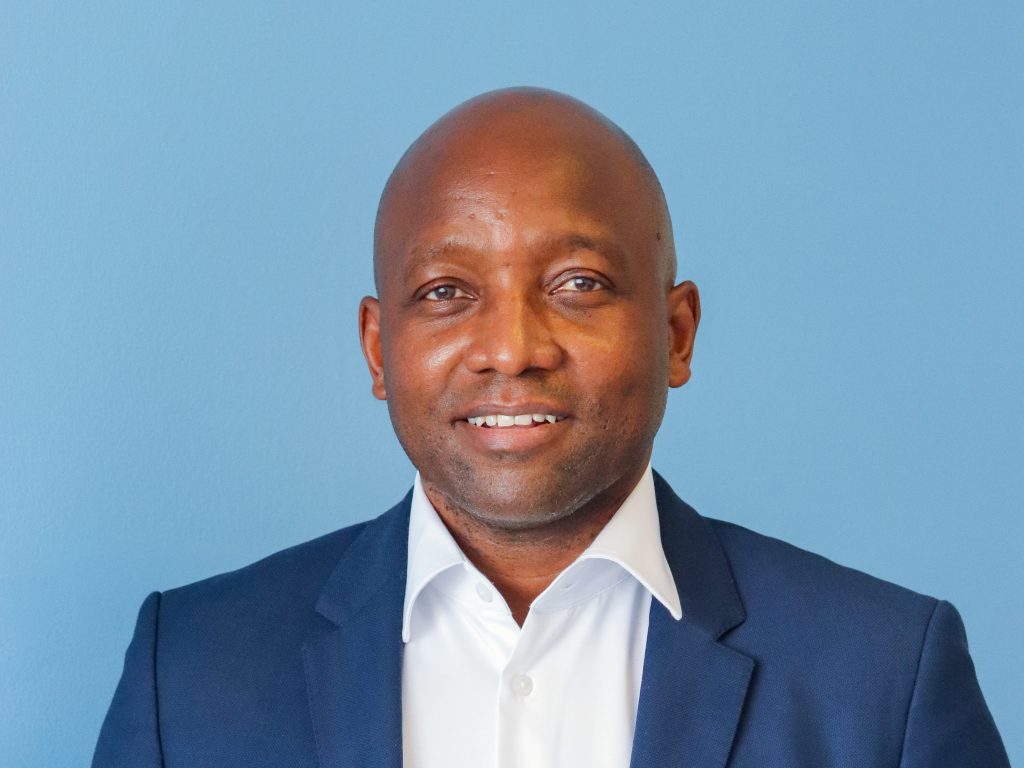
UNDP resident representative in South Africa and director of the Africa Sustainable Finance Hub, Maxwell Gomera.
The Carbon Markets Africa Summit (CMAS) will be taking place in Kigali, Rwanda in October. Launched last year as a platform for carbon finance, policy coordination and deal-making in Africa, it arrives as the continent’s governments and investors try to turn Article 6 rules and carbon market ambitions into bankable projects.
Maxwell Gomera is preparing for the summit as UNDP’s resident representative in South Africa and director of the Africa Sustainable Finance Hub.
ESG Global asked him about the “lie” he hears most about the just transition, what Rwanda and South Africa share in climate finance governance, and how he practices sustainability at home.
What is the single biggest lie you have heard about the just transition?
“Lie” is not the word I would use. I would call it a miscalculation: the belief that all climate finance is automatically just finance.
Take South Africa’s Just Energy Transition partnership. The original US$8.5 billion package was an important breakthrough. But only about 4 percent of it was grants. Around 63 percent was concessional loans, and the rest commercial loans and guarantees. Loans are not the villain. They can build power lines and solar plants that pay for themselves. But retraining a worker, or helping a coal town find a new economy, rarely pays back on a lender’s timetable. Those parts need grants and patient capital.
When communities hear that billions have been mobilised but see little of it in their lives, trust drains away.
So the real test is not how much we announce. It is who can reach the money, who carries the risk, who repays it, and whether those paying the highest price for the transition end up better off. “Just” cannot be a label we add afterwards. It has to shape the finance from the start.
You previously led UNDP in Rwanda. What are the overlapping governance standards between Rwanda and South Africa when it comes to climate finance?
I’m privileged and lucky to have learnt from two countries at the frontier of climate finance. In Rwanda, UNDP supported the government to establish Ireme Invest, the country’s green investment facility. It works through two linked windows: grants to get projects investment-ready through the Rwanda Green Fund, and concessional loans and guarantees through the Development Bank of Rwanda. It launched at COP27 with about US$104 million and has since attracted up to US$200 million in commitments. Partners came because they could see clear priorities, capable institutions and a disciplined path from policy to investment.
South Africa is a different animal. It has deeper capital markets, a carbon tax and companies that can use carbon credits to reduce their tax bill. That shapes how it approaches Article 6 of the Paris Agreement. Rwanda is building routes to international buyers. South Africa must balance strong demand at home with opportunities abroad. Both must keep enough emission reductions to meet their own climate targets.
Yet the governance foundations are strikingly similar: national ownership, clear rules, credible measurement, no double counting, strong safeguards and real benefits for communities.
What people underestimate about Rwanda is how well it gets institutions pulling in one direction. What they miss about South Africa is that it is not waiting for foreign climate money. It has its own savings, investors and industrial demand.
Rwanda teaches coherence and execution. South Africa teaches market depth, regulation and social dialogue. Working in both taught me that Africa does not need one model copied across borders. It needs strong common standards, adapted to the economy in front of us.
Which of the three Rs of sustainability do you practise most often at home, and can you give an example?
Reduce, easily. It starts in my kitchen. I cook for myself quite often. That keeps my diet in check, but it also means I shop with a plan, cook what I need and throw away less. The best waste is the waste you never create.
I also separate my rubbish, although the collection truck sometimes seems determined to reunite it all later. It is a small reminder that personal discipline only goes so far. Reduce, reuse and recycle work best when collection, processing and markets are built to match. I keep doing my part. I have just stopped pretending my part is the whole system.
 Subscribe to ESG Global newsletter