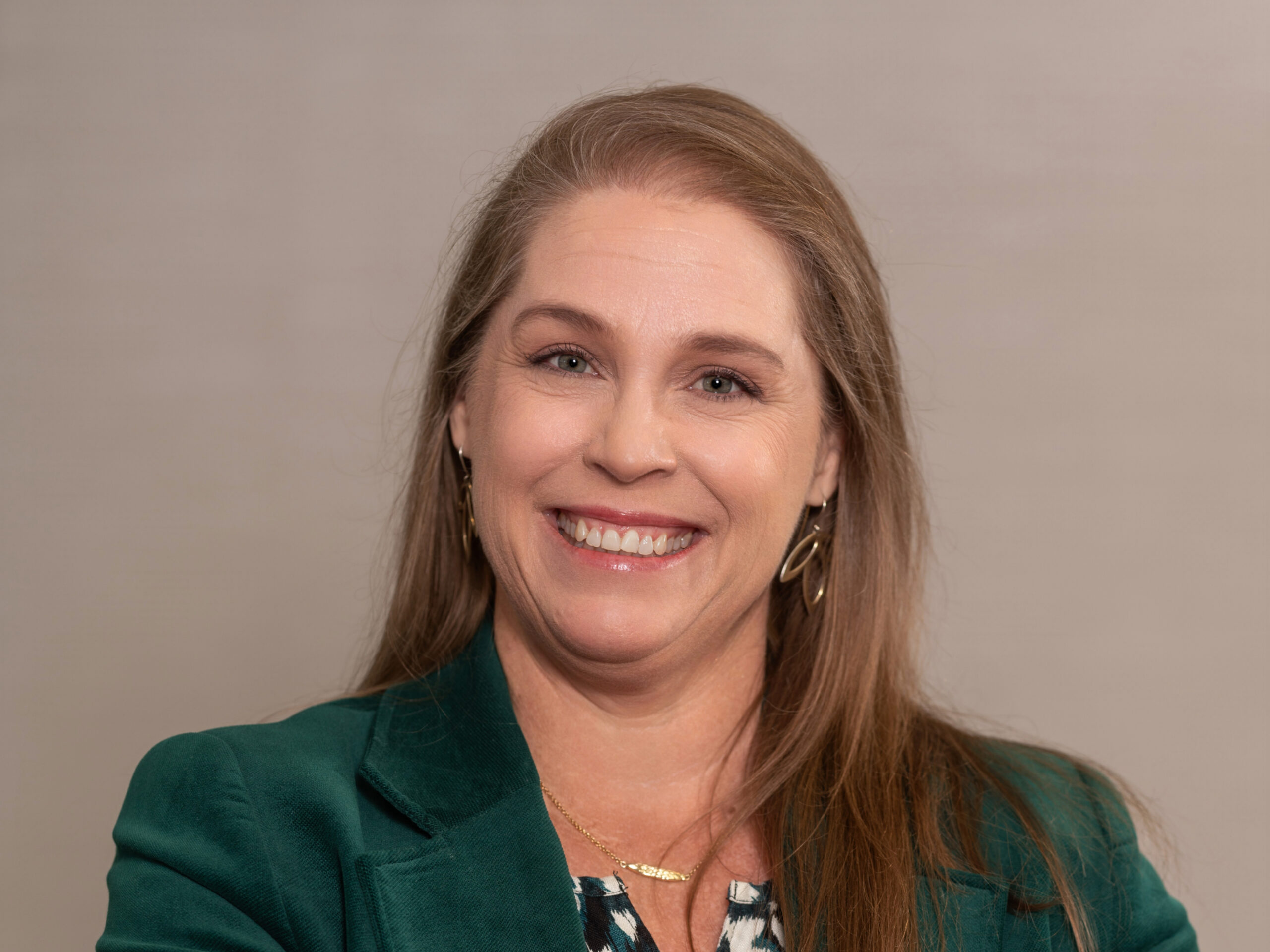
Sappi’s group head of Investor Relations and Sustainability, Tracy Wessels.
Sappi secured an A score for Forests from the Carbon Disclosure Project (CDP) in 2025, placing it in the upper tier of nearly 20,000 assessed companies. While the forestry ranking led the way, the company’s other metrics showed a mixed bag: an A- for Climate Change and a B for Water Security. These scores serve as the baseline for Sappi’s recently released 2030 environmental targets.
ESG Global posed three clever questions to Tracy Wessels, Sappi’s group head of Investor Relations and Sustainability, relating to water security, behavioural shifts for local landowners and employees – and her personal approach to sustainability.
You have spent over two decades at Sappi, moving from a graduate into the heart of Investor Relations and Sustainability – and you hold a PhD in Organic Chemistry. How has your career shaped your personal philosophy on sustainability?
Spending more than two decades in one company gives you a unique long-term perspective, and I’ve been incredibly fortunate to experience sustainability from many different angles within Sappi. I started in R&D, then worked closely with customers and manufacturing operations, and more recently with investors.
Each of these areas comes with very different sustainability priorities, pressures, and challenges, and seeing how they intersect has been fundamental in shaping how I think about sustainability today. Now, as head of Sustainability for the Sappi group, I have visibility across the full spectrum of our stakeholder issues. That has reinforced for me that sustainability is very much a journey. There are always unexpected challenges and plans rarely unfold exactly as you first imagine. What’s become clear to me over time is that all elements of sustainability are deeply interconnected, and our role is to continuously find the right balance and trade-offs between driving the long-term prosperity of the company, addressing environmental and social responsibilities, and creating meaningful value for our stakeholders.
Over the past 20 years, I’ve also seen global sustainability trends shift and evolve. While those trends are important, I’ve come to believe that the greatest value for Sappi doesn’t necessarily come from simply aligning with the latest global narrative. It comes from focusing on the issues that genuinely create shared value for our business and for the people and communities we impact. By taking that approach, we can identify the most material risks and opportunities, set quantifiable targets that both mitigate risk and drive long-term value, and avoid being distracted by external “noise”.
To be truly sustainable as a company, the direction of travel must be clear. While the journey may require the occasional re-route, our destination and what we aim to achieve is firmly grounded by our values and specific business context, which underpin our sustainability strategy.
Where have you seen the biggest behavioural shifts, in Sappi’s employee base or among local landowners?
We have seen significant behavioural shifts in both our employees and local landowners, as sustainability has moved from being an abstract or esoteric concept to a practical, shared understanding of what it means in day-to-day operations, enabling both groups to translate awareness into meaningful action.
Among employees, the introduction of the Thrive strategy in 2020 and our mission to create a thriving world provided a framework that has driven much more proactive engagement. Sustainability is now being integrated into daily work, with greater awareness of our environmental and social impacts and a growing number of employees acting as sustainability ambassadors across the organisation.
At the same time, forestry landowners have evolved from primarily complying with legislation to actively embracing best-practice forest management through certification frameworks that addresses both environmental and social impacts. With Sappi’s support, there has been strong uptake of third-party certification among small growers, and our relationship has shifted from a supplier model to a true partnership, making sustainability a core part of forestry operations in South Africa, which now has one of the highest plantation certification levels globally.
Water is the latest challenge affecting South Africans. What are the top focus areas for Sappi to move to an A in water security?
Water is one of the most pressing and emerging challenges for South Africa, and it is a critical business priority for Sappi. Currently, we are rated by CDP at a B for water, which reflects that we are firmly in an implementation phase. To move to an A, or “leadership” level, our focus will be on expanding our public policy engagement, strengthening industry collaboration, and broadening the scope and ambition of our water targets. Our approach is guided by our Thrive business strategy, which operates in five-year phases. We have just completed the 2021–2025 phase, during which our water strategy has been built around a risk-based approach. We use climate scenario modelling to identify manufacturing operations that face the highest physical and transitional risks related to water security and water-related impacts.
The negative impacts of climate change in South Africa are well known, and we have already experienced water-related business disruptions in the region. For this reason, we have had a 2025 water target in place for our South African operations for several years, supported by detailed water management and action plans.
Looking ahead to our next strategic phase to 2030, we have significantly expanded our ambitions. We have set a group-wide water target, recognising that water is a key element within our broader nature-positive focus. We are also beginning to see water-related risks and impacts in our European and North American operations, reinforcing the need for a global, integrated approach. Because of the interconnected nature of climate, water, and forests, we take a holistic view in our strategic planning.
Over the next five years, we aim to expand our water management activities across the group, identify opportunities for risk mitigation, and deepen stakeholder collaboration. We recognise that water is a shared resource, and where there is scarcity or supply risk, meaningful engagement at a landscape level with all users is essential.
Finally, we continuously evaluate best available technologies and benchmark our performance both internally across our mills and externally against our peers to ensure we remain relevant, competitive, and aligned with leading practices in our industry.
 Subscribe to ESG Global newsletter